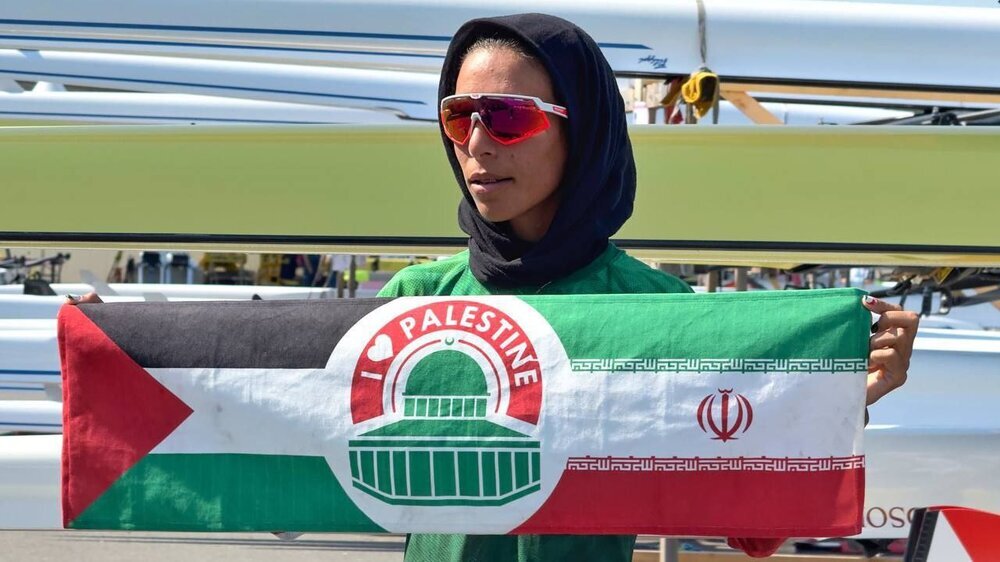



When Soraya Aghaei Haji Agha was appointed to the International Olympic Committee (IOC) Athletes’ Commission, the news signaled not just an individual achievement, but a breakthrough for Iranian sport. For the first time in history, an Iranian athlete has earned a seat on this influential body — a milestone that resonates far beyond badminton courts.
🏅 A Landmark Appointment
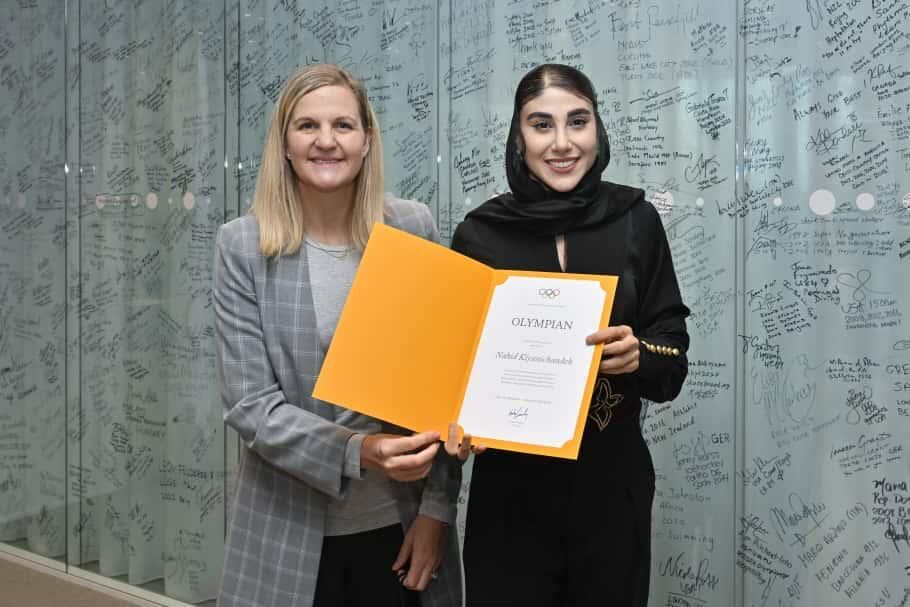
On 4 December 2025, IOC President Kirsty Coventry appointed five new members to the IOC Athletes’ Commission, bringing its full complement in time for the 2026 Winter Olympic Games. Among them was Soraya Aghaei.
Her inclusion marks the first time an athlete from Iran — and specifically the first Iranian woman — has been named to this important commission.
A Turning Point
- As a former Olympic competitor (she represented Iran in badminton at the 2020 Tokyo Games), Aghaei brings first-hand athlete experience to a body that influences Olympic policies and athlete representation worldwide.
- Her appointment elevates the voice of Iranian athletes on the global Olympic stage — offering a new channel for representation and advocacy from a region historically underrepresented in decision-making roles.
- For young Iranian athletes — particularly women — Aghaei’s achievement stands as a powerful symbol: international recognition and influence are attainable.
What Her Role Could Mean
The Athletes’ Commission plays a crucial role in ensuring that athlete perspectives guide the policies and decisions of the IOC. With the addition of Aghaei, the commission now includes 23 members from different continents, representing a wide range of sports.
As she steps into this new role, many eyes will follow — on how effectively she channels athletes’ concerns, promotes fairness, and strengthens Iran’s presence in global sports governance.
A Personal Triumph — And a Broader Symbol
For Soraya Aghaei, the appointment is recognition of her dedication, hard work, and Olympic journey. For Iran’s sporting community, it’s a landmark: proof that persistence, talent, and ambition can break long-standing barriers.
Perhaps most importantly, it opens a door — showing that Iranian athletes can do more than compete; they can shape the future of sport from inside global decision-making bodies.